Der Fluss bin ich – Tatort Paderborn
Public art exhibition 2025
Curated by Marijke Lukowicz and Sophie Trollmann
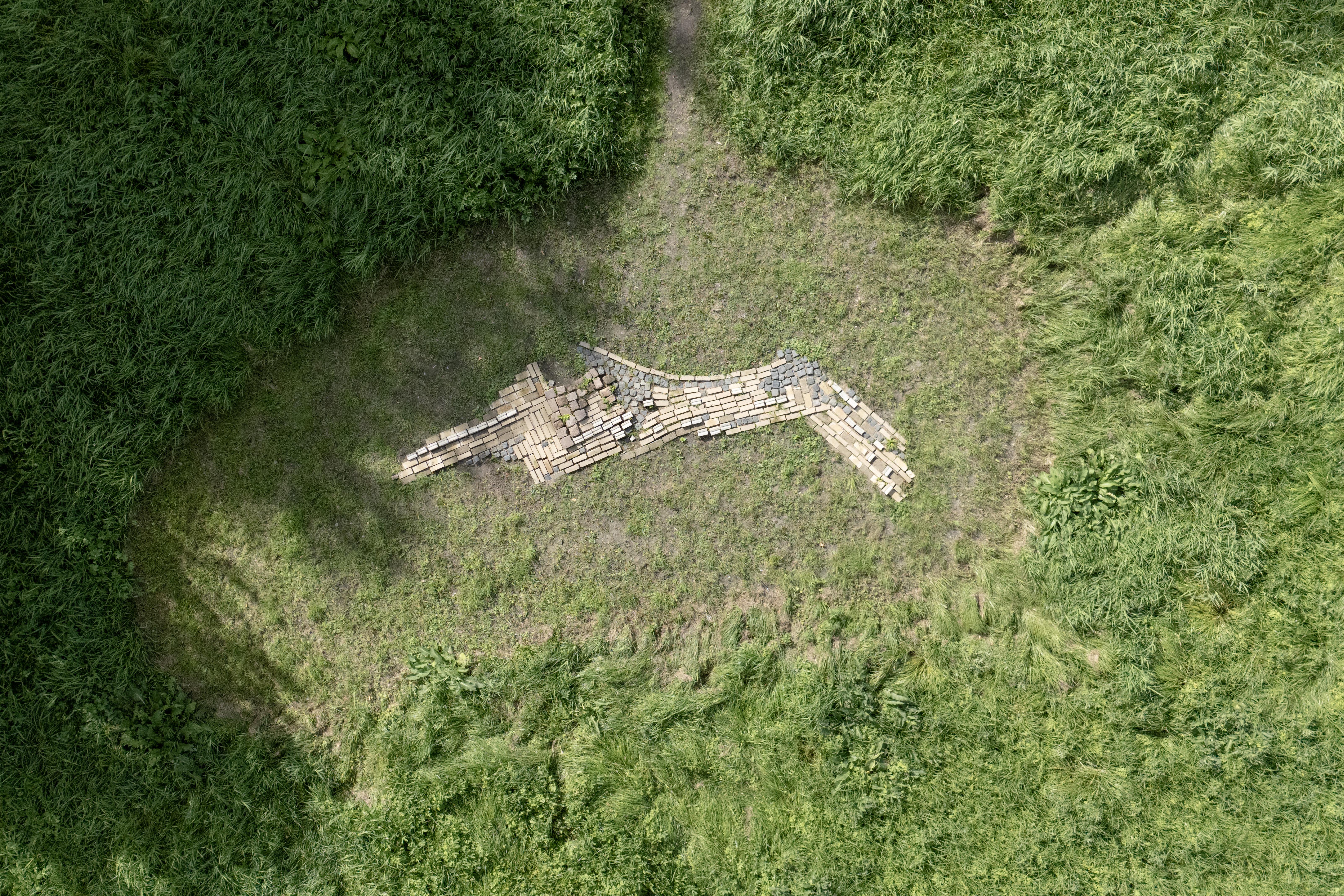
Island 1 – Meadow at Padersteinweg, near Hans-Humpert-Straße
The first sediment island, starting from the city center, features a layered surface made from different types of paving stones taken from the construction site at the spring. The varying sizes of the stones create surface elevations of up to approximately 5 cm. Over the summer, grass will grow through the gaps between the stones, connecting with the layers of sediment and creating an interaction between organic and inorganic materials.
Dimensions: approx. 7 m x 2 m.
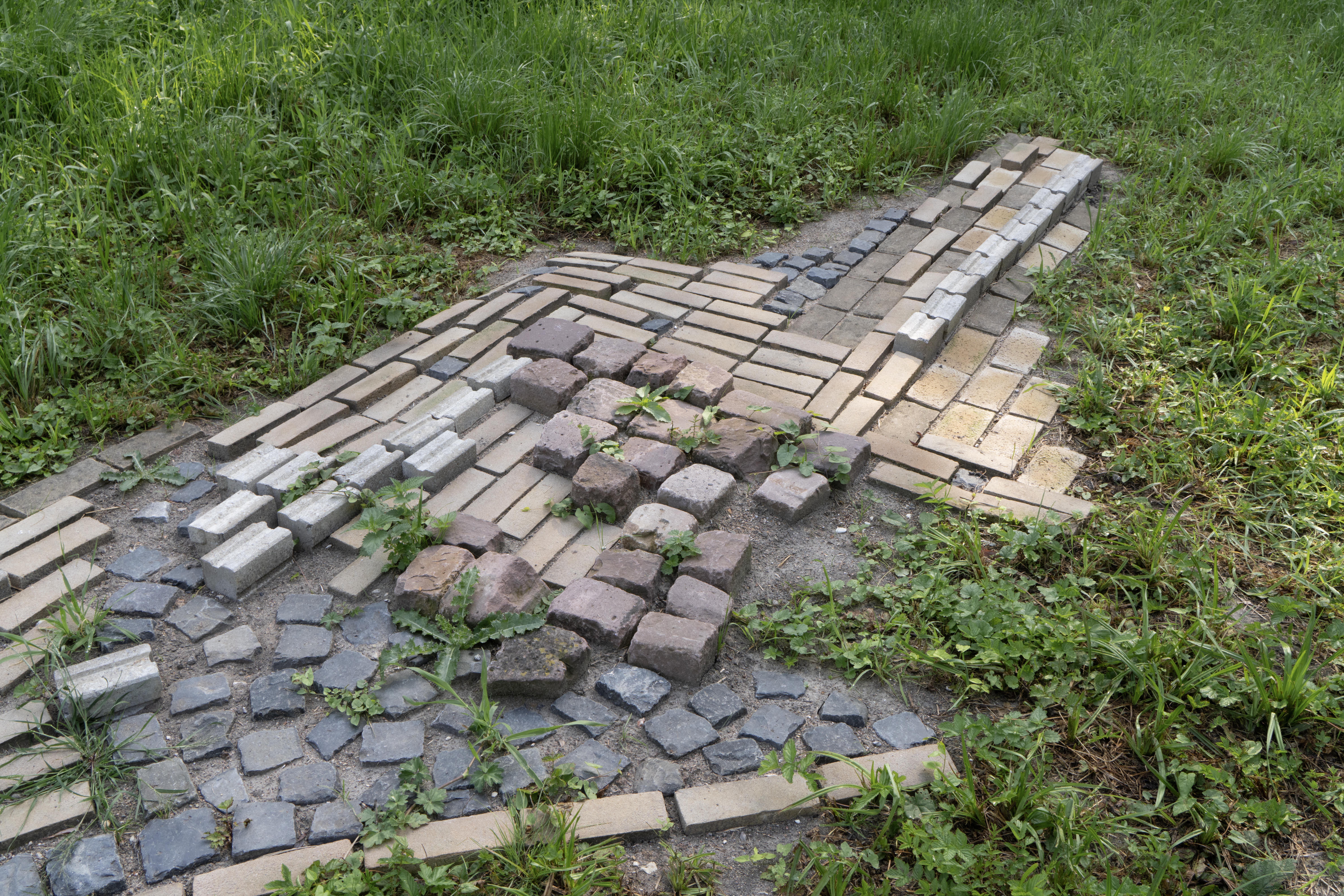
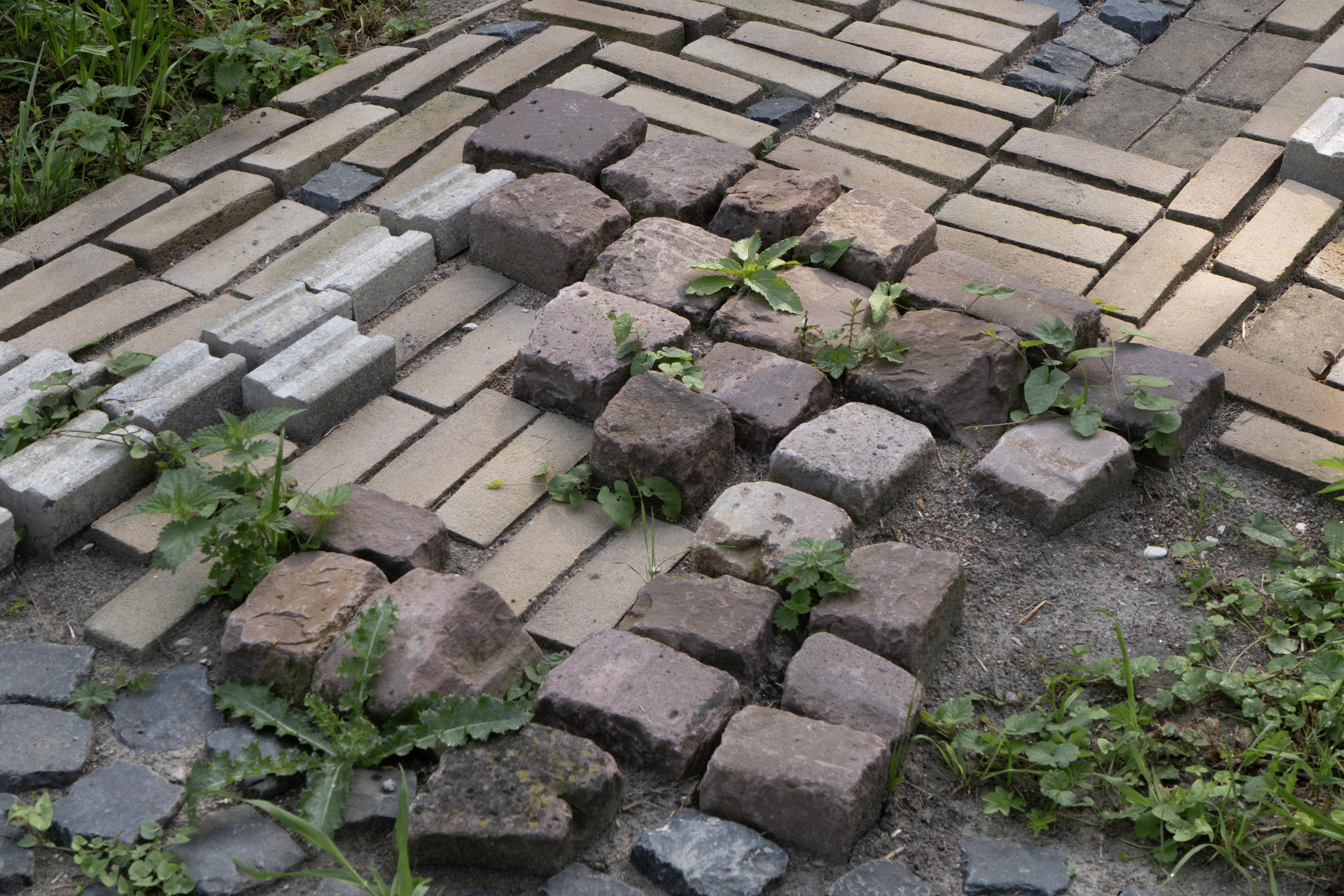
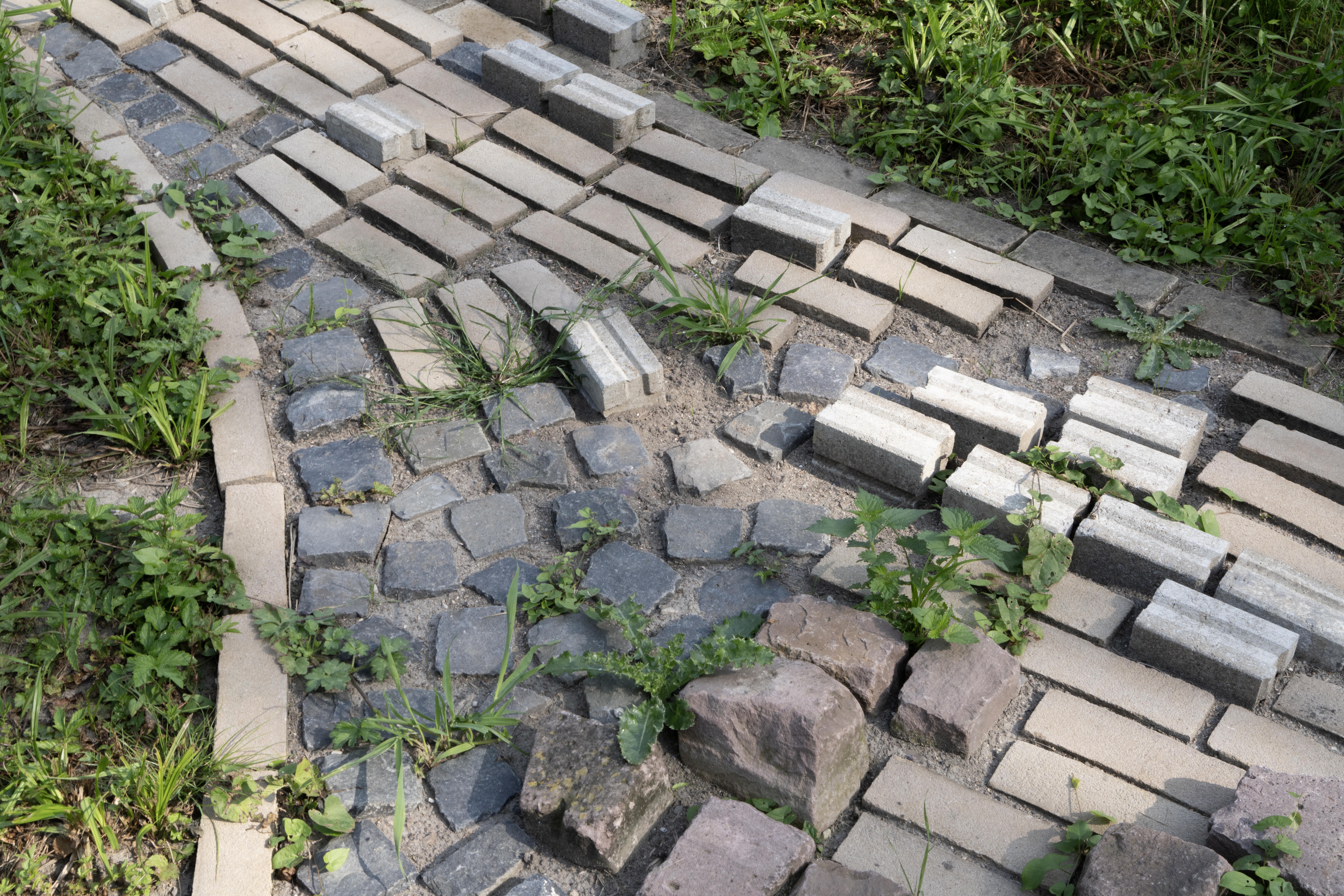
For the exhibition “I Am the River”, organized by Tatort Paderborn, has been realised fuor installations along the river Pader, “Sediments – Island 1,2,3”, in collaboration with raumlaborberlin.
The fundamental importance of water for the existence of humanity is becoming increasingly evident on a global scale. Yet, in an almost presumptuous way, we still perceive water merely as a resource – implying a consumption that, in truth, cannot occur.
Water is a complex entity that continuously changes its form and boundaries over time. For survival and for many of the processes that make up our society, we are only ever allowed to borrow it – before returning it. In doing so, we constantly add new “memories” to this entity. Every time we come into contact with water, an exchange of experiences takes place.
Even without actually consuming water, humanity continuously alters its quality. By packaging and shipping it, polluting, diverting, constraining, draining, and exploiting it, we reveal our persistent inability to properly reflect on our fragile relationship with – and dependence on – water, and to treat it with due respect.
With our work Sediments, we aim to transfer the concept of the non-consumability of water to other materials. Due to the damage caused by the tornado in May 2022, restoration work at the historic garden at the Pader spring has become necessary, rendering some of the materials used there obsolete – and now available for reuse. Like the water that bears the name “Pader,” these materials continue to flow into the next stage of their existence. We intervene and reclaim these resources for our work. The Pader springs become an open-pit mine. More precisely: paving stones, lampposts, or railings – objects from the urban realm – “dissolve” into the spring water and are “carried away.” Along the course of the Pader, these materials accumulate at four specific locations as urban sediments.
By mimicking a natural process, we reorder and layer urban material – without altering its original form. Between the city center and Neuhausen, four sediment islands emerge, overlaid with a new narrative about the interaction and transformation between urban and natural landscapes. These islands are also porous archives: they preserve the material – and the memories associated with it – in specific places in the city, while simultaneously seeking the influence of primarily non-human actors in these new locations.
In the flow of time – and the Pader – forms emerge that are deeply intertwined with their context, suggesting a possible cohabitation between what was and what is yet to come.
 Zhenru Liang 真如 तथाता